
The goal was to create a next-gen AI digital assistant that could help employees streamline their work, boost productivity, and minimize errors – all while delivering a seamless, personalized experience.
Role
UX UI Designer
Products
Web Application
What I Did
UX/UI Design, UX Research (Part of a Team),
Animations, Prototyping
Location
London, United Kingdom
01
Overview
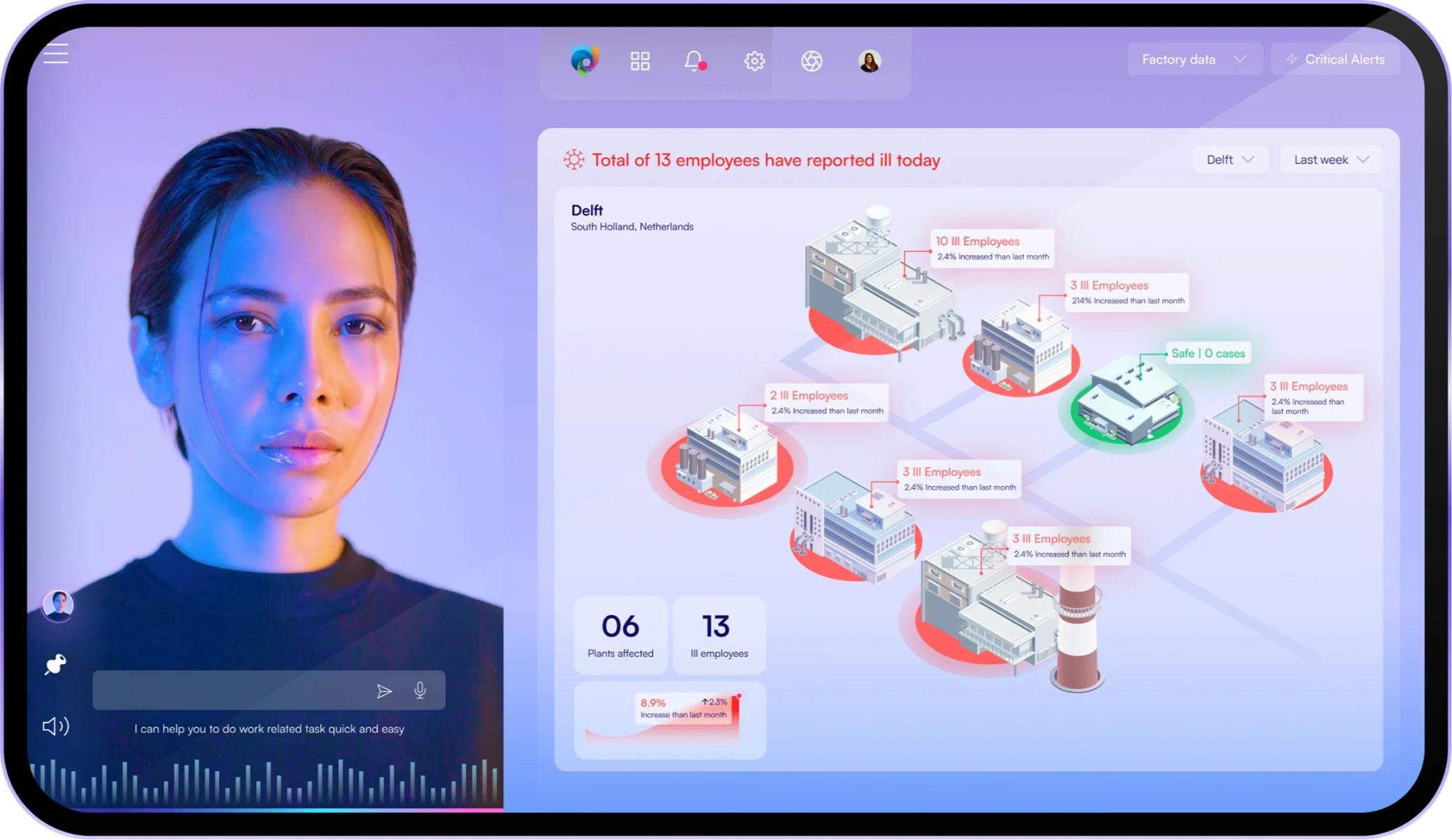
DSM is a multinational corporation specializing in nutrition, health, and beauty. They were exploring ways to implement AI into their employee workflows to maximize productivity and reduce human error. I was tasked with designing a futuristic digital assistant to help DSM's employees work smarter and more efficiently.
02
Before jumping into designing the AI interface, we held several online user interviews to understand how DSM employees were handling their daily tasks. We needed to identify pain points and areas where AI could step in to make a real impact.
Here are some of the main challenges employees were facing:
?
Manually tracking inventory takes up a lot of time and slows down operations.
?
Preparing reports is time-consuming and pulls focus away from more important tasks.
?
Keeping up with all the consumer data is tough, and there’s a risk of missing key details
?
When events like COVID-19 happen, it’s difficult to effectively manage and coordinate the operations across all plants and branches.
?
Manually tracking inventory takes up a lot of time and slows down operations.
?
Preparing reports is time-consuming and pulls focus away from more important tasks.
?
Keeping up with all the consumer data is tough, and there’s a risk of missing key details
?
When events like COVID-19 happen, it’s difficult to effectively manage and coordinate the operations across all plants and branches.
03
Objectives
Design a futuristic, immersive, next-gen digital assistant
We aimed to design an AI assistant that didn’t just feel like a mindless chatbot but rather a dynamic, intuitive experience. The AI needed to feel alive, learning from user history and preferences to deliver seamless, personalized interactions.
Research the areas where AI could help DSM employees
Helping DSM employees with their daily workflows was challenging because of the sheer variety of scenarios they face. We needed to cover as many use cases as possible before moving forward with wireframes.
Build a consistent but adaptive employee dashboard/system
The AI dashboard had to be flexible, user-friendly, and visually appealing, adapting to different tasks while staying consistent. Since the scenarios were complex, I tested various layouts and interactions to make sure every employee had a smooth and intuitive experience.
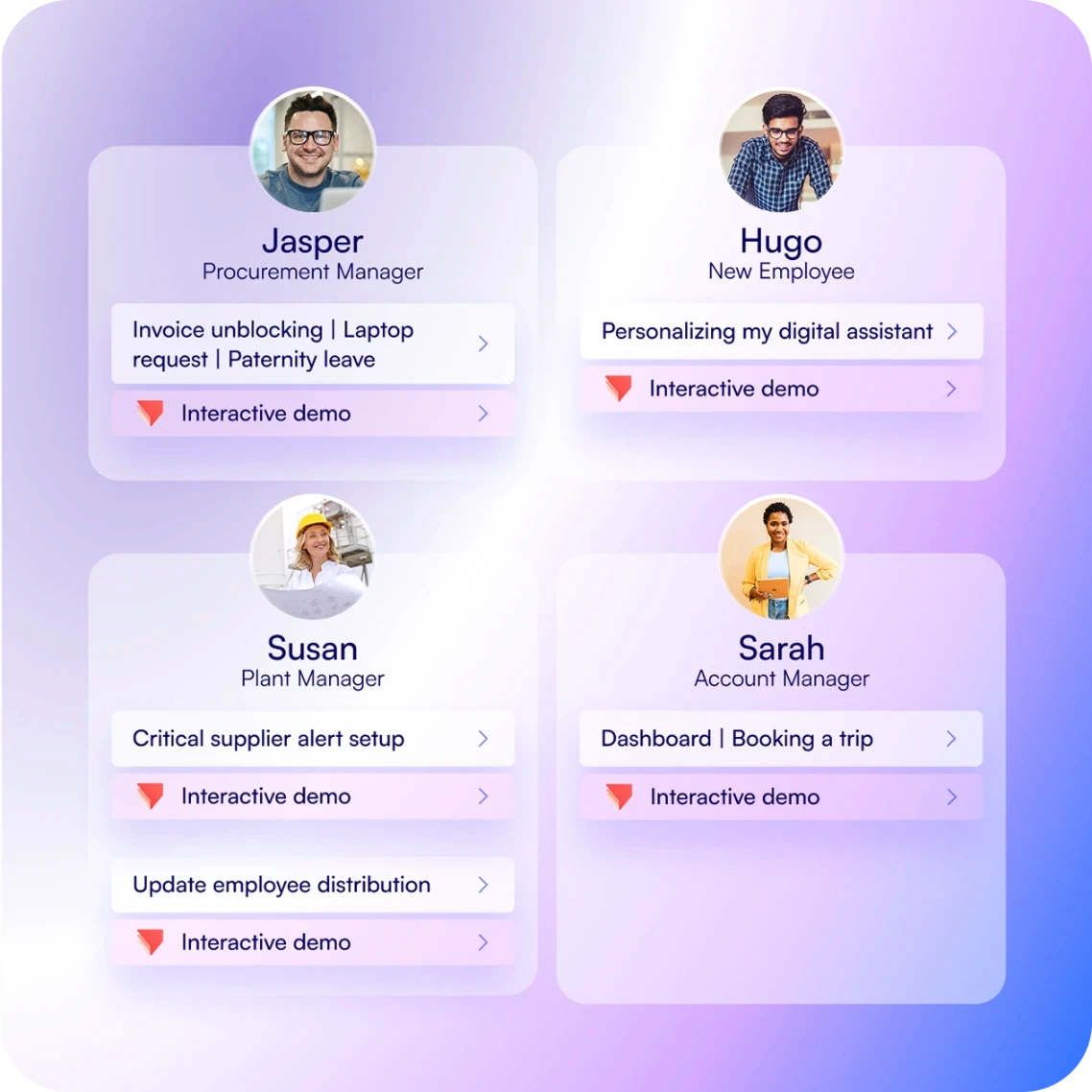
After collecting and analyzing data from the initial research, we developed four main personas: Procurement Manager, Plant Manager, Account Manager, and New Employee. Each persona had its own specific user journey.

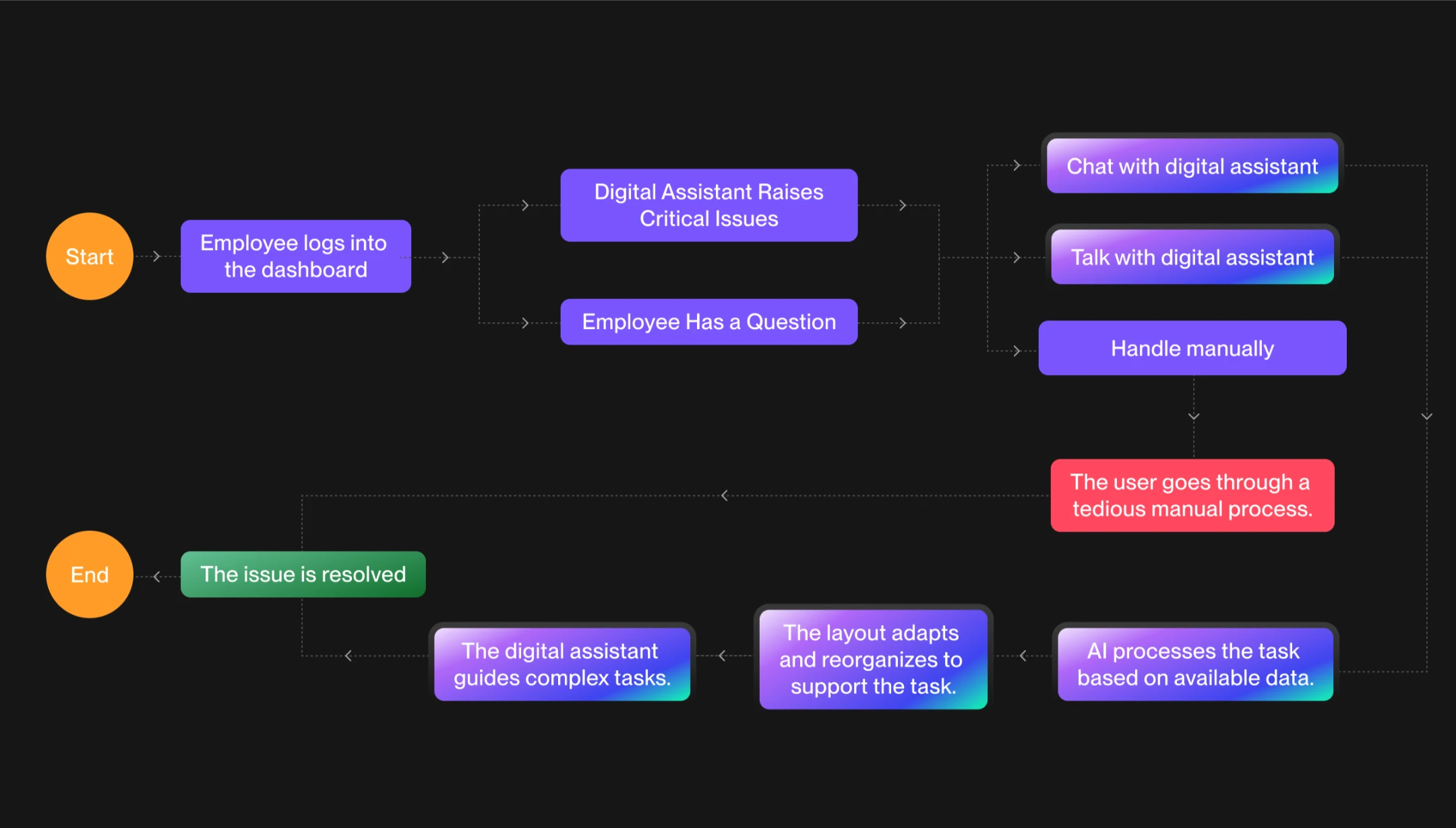
Simplified Flow
01
Advanced Prototypes of
5 Key Flows
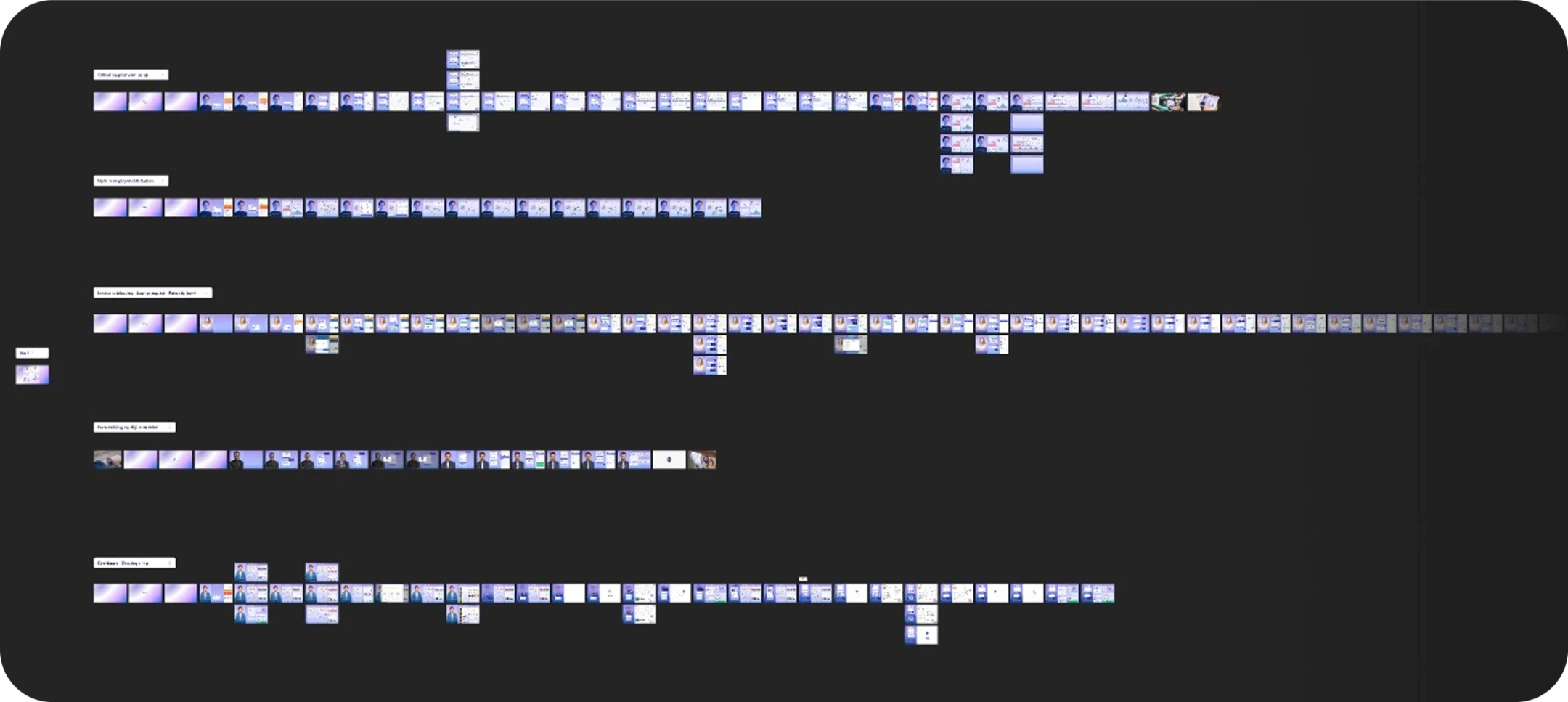
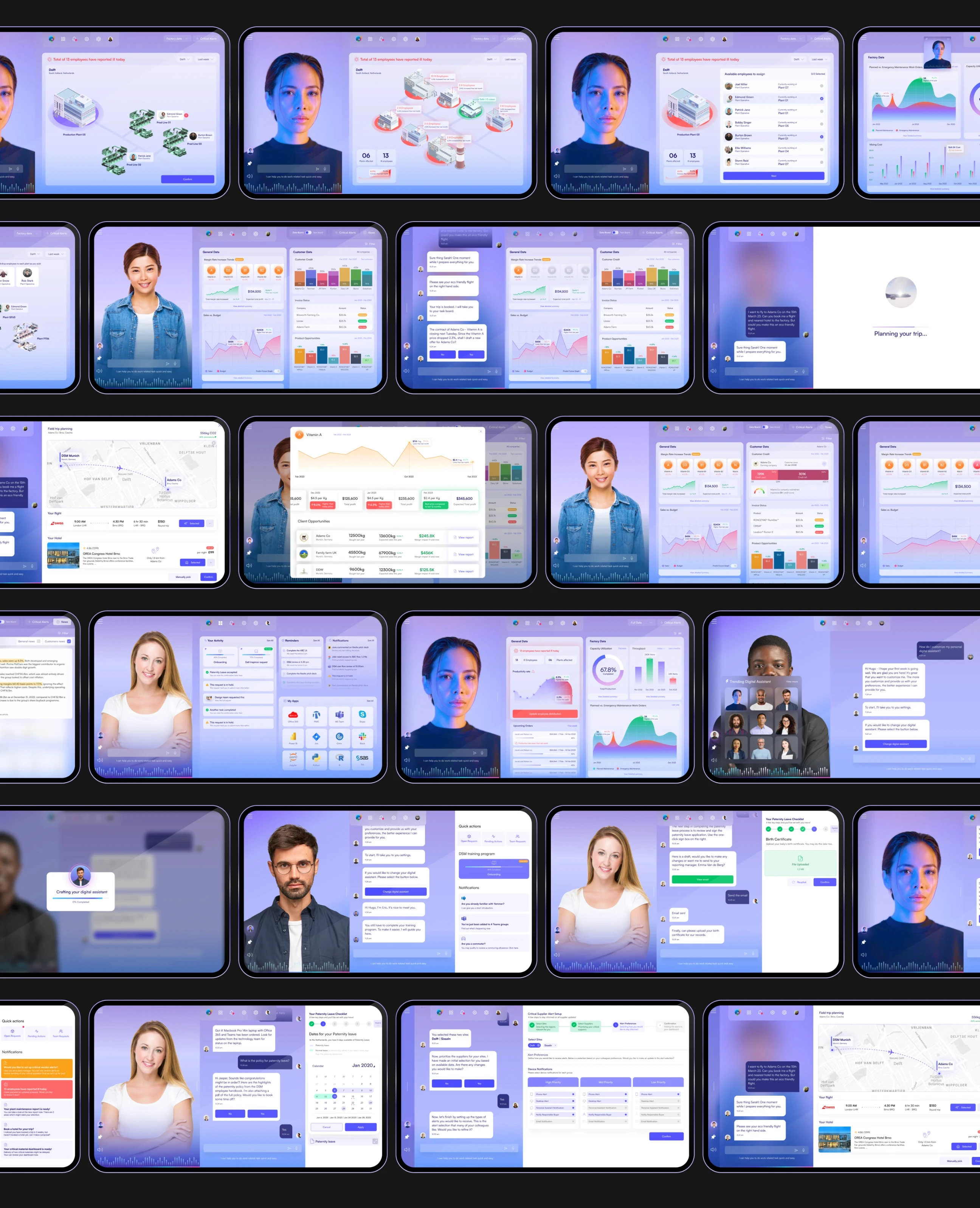
For the final iteration, I developed realistic prototypes for five main flows. The level of visual detail was a UI challenge, but it was crucial to achieve the futuristic feel we wanted.
02
Smooth Interactions and
Micro-Animations
Since this wasn’t your typical dashboard design, I had to go the extra mile to imagine how the interactions would work in a dynamic, adaptive layout. The goal was to create a consistent experience without overwhelming the user, ensuring smooth transitions and a polished interface.
03
Real Avatars and Voice
Command Integration
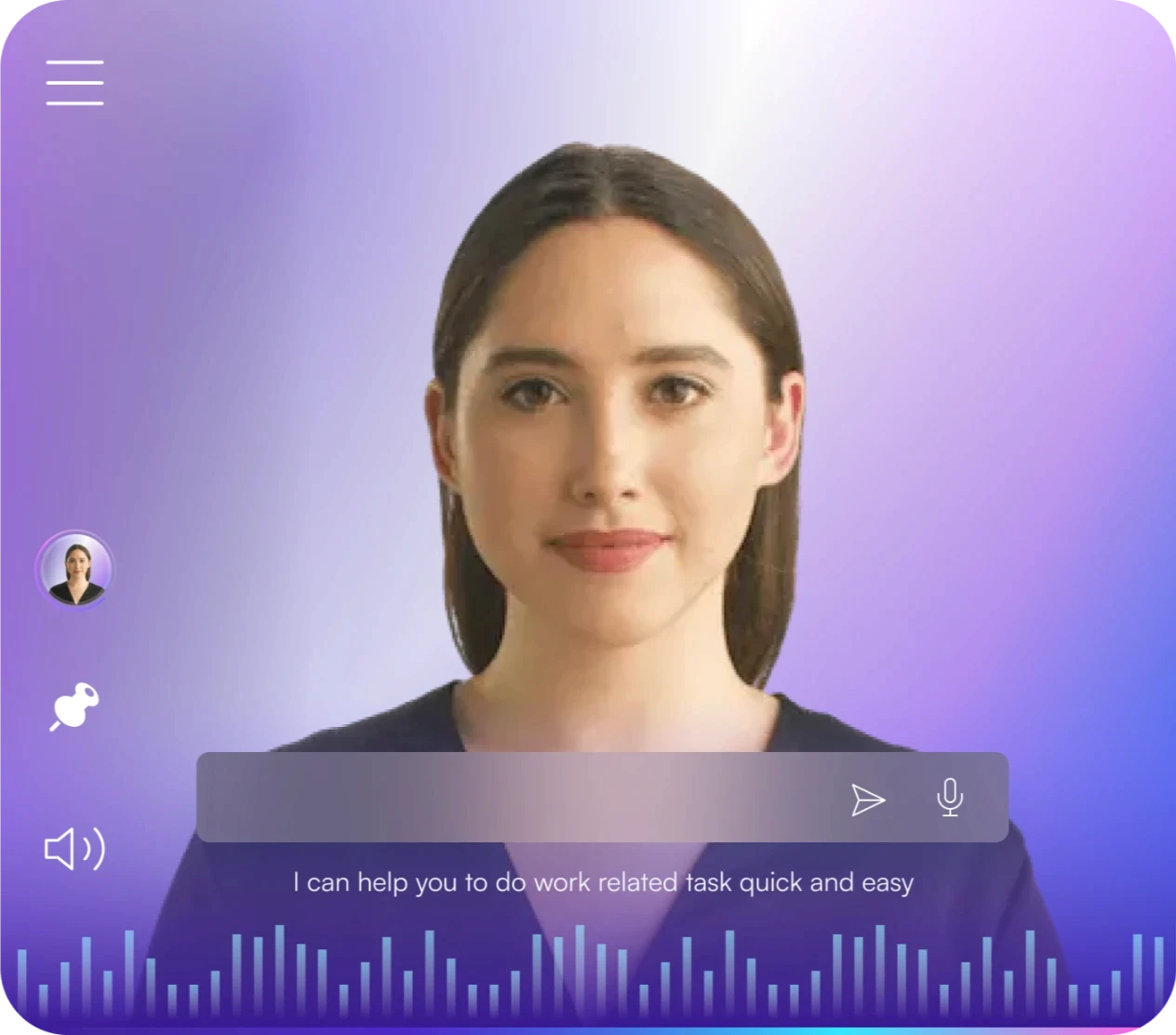
One of the standout features of this project was the integration of voice commands. We experimented with Protopie to bring realistic voice interactions to the prototype.
Additionally, we used AI-driven avatars, adding another layer of realism to the assistant’s user experience. These avatars, combined with voice commands, helped create a futuristic, immersive feel.
05
More shots
06
More Work

07